My So-Called Yoga Life

The best and most beautiful things in the world cannot be seen or even touched- they must be felt with the heart. ~ Helen Keller
My So-Called Yoga Life
  • Home
  • About
  • Contact
  • Category: Life & Yoga

    • Sankalpa~ Giving Beautiful Meaning to Every Single Day

      Posted at 2:48 am by Lisa K, on November 12, 2017

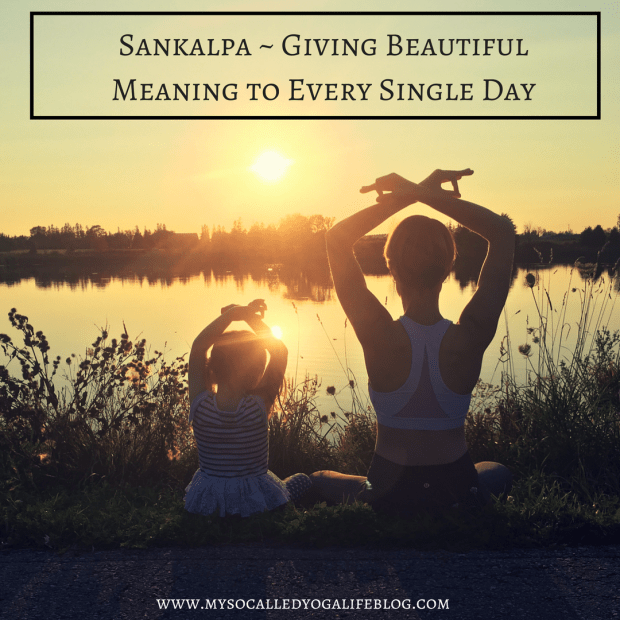
      What is sankalpa?  It is broken down to mean ~ the highest truth of the heart which is followed above all others. It is an intention that you decide to follow that will serve your highest truth or purpose. Sankalpa is referenced in the Rig Veda which is one of the oldest yogic texts that form the foundation of our philosophical understandings of yoga. I have been to many yoga classes where the instructor will invite students to set an intention for the class. May it be to dedicate it to someone or a feeling inside such as “I am joy” or “I am courageous”. The wonderful thing about sankalpa is that it posits that you already are the intention you wish to fulfill. It is just that we must realize and use our mind to focus on bringing out these qualities within ourselves, to connect within. I find this concept to be innately beautiful. Imagine…all the doubts you have about yourself, the unsure thoughts, the potential harmful self-talk you may have from time to time- become non-existent. There is no place for doubt when we already are what we wish to be.  So confidence inspiring, with such conviction and above all so validating of who we are and what we are capable of doing. I am what I am meant to be. I am capable of fulfilling my dharma or my purpose in this life.  There is no question.

      How does Ashtanga Yoga help us to see our Sankalpa?

      Yoga helps us to tune in, to become aware of the thought processes and internal obstacles that make the awareness of our abilities become obscure. We live in a society ridden with self-doubt and unfulfillable ideals. It is like we all want to be something that we think we are not able to be. There must be some impossible task to create dis-ease and woe in our hearts.  Why???? Why do we want to feel inadequate? Why do we buy in to these ideals which are unattainable, therefore causing a sense of incapability?
      It is only when we are challenged that we can truly call on our innate abilities. They will automatically come to the forefront because we need them. It is not easy to commit yourself to doing a physically challenging practice on a daily basis. Ashtanga calls to us to do this. It asks us to be present, to breathe into difficulty, to find ease in what creates uneasiness. Yin and Yang are called to become one. A synchronicity within our internal controls is the savior to our woes. It is part of our creation. We live. We die. We are part of a cycle of life much greater than our individuality that we never ever become disconnected from. It is the fuel, the breath, the momentum of our existence. Sankalpa. Dharma. Life force. These qualities are one and the same. Ashtanga helps to repeatedly identify the strength and perseverance of what lies within so that our Sankalpa may become clear.

      Sankalpa makes me think about my highest truth and why we exist. What is my purpose?

      It’s a difficult thing to contemplate. What is the purpose of existence if we are merely part of a cycle? Why is sankalpa important? I believe it is a question we can only find the answer to in our own way. For me, I have only glimpsed my truth, most notably it has been in some deep conversations with my grandma that I have found some peace and a little bit of insight. I feel that part of my highest truth is to be of service to make the world a better place. I see this in my Grandma. My grandmother is a very strong woman. Among her impressive qualities are enduring love, she gives of herself freely with no expectation. She is compassionate, so giving of all of herself, her thoughts, her love and her life. I connected with her at a very young age. She made me feel strong, appreciated, capable and most of all, loved. I always felt that she would be there for me, even if I faltered or if there was negativity surrounding me. Her care was and is unconditional to this very day in her 85th year of life. She has discussed death and how life is part of this cycle with me from her perspective. When I hear her speak of it, I feel part of her knowing and understanding that it is just part of what it is to be a human being. Now that fact is mere science, but the understanding of it is a much deeper and darker reality that some priming for is a gift. My granny is a beautiful gift of so many things, I am grateful to be among those blessed to be a part of her family and life.
      You see, I view my Sankalpa as an intention with the undertone of service, of giving. The ultimate gift is to give without expectation. This is what may be the sankalpa of my daily life in little bits each day. I can be giving of my heart, to listen, to be thoughtful, to be supportive, to be kind. Like my grandma.  Think about those little intentions that you can do each day to fulfill your own personal Sankalpa – I am courageous. I am joy. I am forgiveness. I am light. I am giving. We are really all of these things already. Do you know that? Find the beauty within you. It is strong.  Share it with others and relish in the happiness that it gives you to make another feel your love. Do it without expectation. Find your Sankalpa and live it each day. How wonderful is it to be able to live your purpose, your highest truth, in little acts each and every day?

      Best Wishes to you all my friends.  May the new week bring many smiles, laughter and love to you💖

      Lisa Michelle xo

      Share the Love

      • More
      • Share on Tumblr
      • Pocket
      • Click to share on Telegram (Opens in new window) Telegram
      • Click to share on WhatsApp (Opens in new window) WhatsApp
      Like Loading...
      Posted in Life & Yoga, Uncategorized | 23 Comments | Tagged communication, energy, happy, inspiration, Livingyoga, motivation, philosophy, vedas, Yoga, yogainspiration, yogalife, yogaphilosophy
    • Sacred Sounds & Ashtanga Yoga

      Posted at 4:42 pm by Lisa K, on October 22, 2017

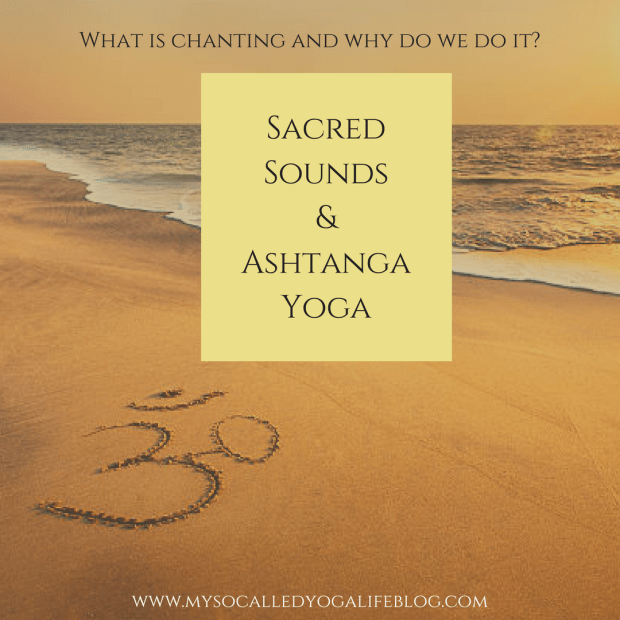
      In Ashtanga we do an opening and closing prayer in conjunction with practice. It is important to sound the Sanskrit words aloud to feel how the vibrations will affect your being. I know that sounds strange at first, believe me, I was that person. I never felt comfortable chanting the words in front of others on my own in the Mysore room. I think it’s because I didn’t have an experience with it that allowed me to really understand its purpose. Once I started to practice at home, I began to realize the significance of the sounds that come from chanting.

      I am alone, I chant and I feel the vibrations within me.

      It’s that simple. Doing this every day by yourself, the sounds are clear and the meditation within it is more palpable, I have found. The opening chant is invigorating, uplifting and a wonderful honour of gratitude for the practice that will unfold following the prayer. At the end of practice, it feels like a seal of good intention that will affect the time after practice wether it be the entire day (which is desirable) or the night to come after an evening practice (more common for me nowadays). The final words of the closing prayer are “om shanti, shanti, shanti.”  This translates to mean universal peace.  It has been interpreted to mean that we are invoking peace for all beings and for all to be happy and free.  This is just such a beautiful thought and intention to vibrate out into the world.

      Regardless of the time which I utter these ancient words, their effect remains. Now when I am blessed to have the ability to go to the shala for practice, I feel confident to say them aloud because the vibration of their sounds is now something I have grown used to feeling before I begin. The lifting energy I feel when the whole room sounds the chant together is powerful. I enjoy doing them very much.

      There are also other chants which I have been taught and connect deeply with. Their uses for me are anything from invoking strength, focus for learning to healing and positive intention.  It is thought that the universe is made up of vibrational sounds and I find that creating them truly helps me to meditate at different times. When I gave birth to my babies, I used sound to help take my mind away from the pain of labour. Especially with my son as it was a completely natural birth experience. In fact, I remembered at the time of his birth that the walls were supposedly sound proofed in the hospital. I had learned that on my tour of the hospital and chuckled to myself when the memory of that piece of information came to me as I deeply om-ed during my labour. Deep sounds helped me to withdraw from the pain I felt during labour and I truly feel that it was my yoga that prepared me for this experience. Of course I also did a lot of swearing and crying because, you know, it really hurts;)

      Just like in learning, meditation styles differ among people. I was an auditory learner and also learned well through writing when I was in school. When I practice yoga, I enjoy asana and chanting but visualizations are not my favourite. Simple visualizations of breathing or the Golden Ball of Light Meditation that I do are good, but more complicated visualizations don’t help me focus as well. My mind wanders off too much. There are many yogis who exclusively practice japa mantra as their meditative practice. Japa translates to mean “muttering” and basically mantras are repeated in this practice many times. Examples could be “Om Namah Shivaya” or “Sat Nam”.  Using a mala is a good accessory for repeating mantras. If you would like to read more about mala, you can find more hereWhat is a Mala?

      It is important to learn how to sound the Sanskrit words correctly and I was informed of this by a wonderful woman who lead our current yoga teacher training group into a Havan Fire Ceremony. I will detail this experience in another post coming soon! The Havan is performed to aid in the energies of creation. The teacher who did this with us made it clear that pronunciation is important because the divine energies we are paying reverence to deserve this respect.

      In writing this post, I think that I will do another chanting post where I will share some of the chants that I know and use regularly.  What do you think? Is there something else you would like me to write about regarding chanting?

      Have a fabulous week!

      Love to you all,

      💖Lisa Michelle xo


      Share the Love

      • More
      • Share on Tumblr
      • Pocket
      • Click to share on Telegram (Opens in new window) Telegram
      • Click to share on WhatsApp (Opens in new window) WhatsApp
      Like Loading...
      Posted in Life & Yoga, Uncategorized | 18 Comments | Tagged ashtanga, chanting, energy, inspiration, knowledge, philosophy, vibration, Yoga
    • Autumn Equinox: The Change of Season and Yoga

      Posted at 12:13 am by Lisa K, on September 25, 2017

      This year, it hasn’t really felt quite like the entrance into autumn. The weather is more like a beautiful July day. Today we took one of our usual walks down to the dog park and pond near our home. In the months when it is warm enough, we just love going down this path to enjoy nature and the beauty of the earth right next to our bustling subdivision. The swans come in the summer, they are magical creatures. There is a majestic heron who we are lucky enough to witness gracefully floating down into his watery home on many occasions. The ducks, the geese, the beaver, bunnies and the dragon flies are around us when we slowly walk around the loop. Our little quick bunny friend I snapped a picture of was so fast that it came out a bit blurry, lol.

      IMG_2890

      This evening was particularly beautiful. I knew that today was the equinox and as we walked, I thought about what that means for us in the months to come. The darkness will come, the cold and a change in our routine in many senses. Apple picking, pumpkin patching and crisp evenings are on the way.

      As an Ashtanga Yoga practitioner, I am keenly aware of the cycle of the moon. We observe the new and full moon and do not practice on these energetically potent days. Tied to the earth in so many obvious and more subtle ways, it is part of the practice to become cognizant of how these cycles affect our bodies in an acute fashion. The daily breath and movement I experience allows for this awareness to grow slowly over time.

      Yoga poses that were easier and more in tune with the vibrations of summer don’t feel quite the same. These are backbends and opening postures. The natural warmth of summer helps muscles to easily warm up and I find my more difficult postures come more readily. Autumn gives way to the strength and inwardness of folding forward and earthy poses like kurmasana and baddha konasana. Though we don’t change what we practice as do the seasons, poses feel different in my body.

      I find that as the cold and dark come, my body feels more stiff. I need to focus more deeply on my breath and creating the internal heat necessary for my practice seems to take longer. When Ashtanga first found me, it was 5 Surya Namaskara a and 5 surya Namaskara b which we practiced before the standing series. Later, it changed to 5 a and 3 b. I find that after the equinox, I generate more adequate heat by doing the 5 a and 5 b. In winter, as a home practitioner, this is what I do much of the time.  I use a heater almost all year round, but I find it necessary as the weather turns cooler. A little added warmer!

      I do an evening practice sometimes, when my day is too busy to find a morning time. This week, I did an evening practice and was disappointed by the lack of evening sun. I had to close my blinds so my neighbours behind me wouldn’t wonder what was going on over here, lol. Because it was a couple of weeks since my last evening practice, it was very noticeable how much had changed in our daylight hours.

      Soon it will be time for pumpkins and Halloween costumes. Every year the changes are more or less the same. I welcome our new autumn season and look forward to the beauty and rhythm of change to come in the months ahead. Best Autumn Equinox and season to all, enjoy this time of earthly change. Winter is coming!

      Love & Light,

      Lisa xo


      Share the Love

      • More
      • Share on Tumblr
      • Pocket
      • Click to share on Telegram (Opens in new window) Telegram
      • Click to share on WhatsApp (Opens in new window) WhatsApp
      Like Loading...
      Posted in Life & Yoga, Uncategorized | 19 Comments | Tagged ashtanga, autumnequinox, life, lifestyle, Yoga, yogalife
    • Ashtanga Yoga: A Moving Meditation

      Posted at 4:03 pm by Lisa K, on September 17, 2017

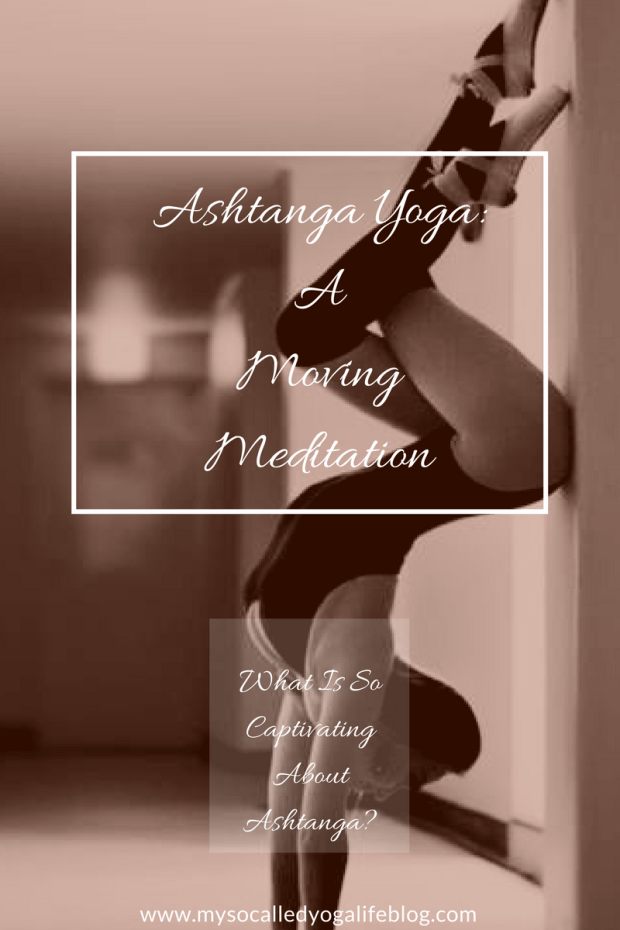
      Ashtanga Yoga is known as a practice which follows the same sequence of poses every day. We build on more poses as strength and flexibility grow in our bodies and minds. The very first time I experienced an Ashtanga style class I thought it was unusual that between sun salutations there was a five breath hold in downward dog. All the vinyasa classes I was used to doing did all sorts of movements in the sun salutation and it was just so much different. I thought it was a bit boring to be honest. The difficulty level and the feeling I got after concentrating so much more on breathing still left me intrigued. Why the hell would anyone want to put themselves through this? I wanted to learn more about it and more strangely, I wanted to experience it further. That is how it began.

      So what is it about Ashtanga, why is it so captivating?

      I believe it is the Trishtana as it creates  harmony within, that grasps our desire to go further than dipping your toe in the water…

      The Tristhana in Ashtanga is a focus on three places of attention. These are breath, drishti and posture.

      Breath

      The breath literally guides movement in Ashtanga. Even moving between poses have assigned inhale or exhales to maintain the deep methodical breathing utilized, creating heat and focus. The breath is what gives rise to our ability to create effort. When I am doing a very difficult pose, my teacher will remind me to breathe so that I may continue to do the work necessary to continue on. On to discover the next place where I will challenge my limits.

      Drishti

      The drishti is the gazing point. Each pose has a gazing point but the eyes are not really focused on any particular place. There are nine different drishti and it depends on the pose as to which is used. As the pose sequence, the drishti do not change and are practiced with each pose daily. When I am using drishti, my attention turns inward and my meditation becomes firmly planted in that moment in time. I feel and hear my breath. I feel more deeply into my body. Where do I feel the earth beneath me? I notice the effort I am using. Gosh, I forget how much it takes until I bring it back into my awareness. As much as my practice can be physically exhausting, the soulful bond I restore with my internal being is continually nourished and invigorated with each and every breath I take.

      Posture

      The third of the Tristhana is posture and it includes the asana and also the bandhas or energy locks. Particularly mula bandha and uddiyana bandha. These refer to the muscles of the pelvic floor and the low belly. Mula bandha has often been described to me as the muscles which stop the flow of urine. My teacher has another way to describe it, which is to squeeze the anus. Graphic right? Honestly, I have been able to connect more with this squeezing than the pee thing, lol. The uddiyana bandha is activated by drawing the low belly in. The strength created by utilizing these two muscle locks is the seat of power for every pose. Having a background in ballet dancing, I recognized the same feeling in my body when I danced. It is like the entire inner line of the legs from the base of the big toe right up into the solar plexus is involved in this energetic synergy. The grace that is made to look so effortless in both ballet dancing and yoga comes from this place. Perhaps it is the familiarity of remembering something I loved very much that solidified my love for Yoga from the very beginning.

      Together these three points of attention are what bring Ashtanga Yoga practitioners into a state of moving meditation. Our gaze turns inward and the magical awareness of the moment in time being experienced ~ Right. Now.~ is sometimes like slow motion Matrix movie perception. Everything slows down, breath is deep and rhythmic, sweat drips slowly down onto the mat, muscles flex and the body moves through space like a graceful and perfectly orchestrated dance. It may not look as such but it can feel this way on the best of days. Other days, I can feel like an old rusty tin man trying desperately to locate the nearest oil can. But that is the nature of being human. We fluctuate, our bodies and minds fluctuate.

      The Yoga Sutras of Patanjail states in the Samadhi Pada:

      योगश्चित्तवृत्तिनिरोधः॥२॥
      1.2 yogaḥ-cittavr̥tti-nirodhaḥ

      This is translated to mean that yoga is the removal of the fluctuations of the mind. This is really an ideal with which we are working towards by practicing yoga. For me, the seemingly short distance of just under ten years has already provided some impressive breakthroughs in my own personal journey. Knowing how tiny that really is actually serves as a motivation! If my experiences on this level have been so profound to me, I can only imagine what could be ahead for my soul in the wide expanse of time.

      Every day, when I step onto my mat and look down to my feet, I feel gratitude. I am grateful to be alive, a being on this earth. I have been fortunate enough to find the gift of Ashtanga Yoga among other powerful gifts in my life. It is a blessing to be here and it is a privilege for me to share this gift. I know now that I am truly ready to teach yoga. I want to create a place for others to see that glimpse of light that I caught and then watch them nurture it and see it grow.

      Taught my first class on Thursday in a few years and I’m in such a great place to teach from now. Years ago when I first taught, I thought about how difficult my class should be and if people will like me.  These were not the right things to be worrying about.  I then went to Thailand and learned so much that I felt humbled to the point of feeling like I should not teach. I felt that I knew so little that it would be wrong to try and teach anyone else. Now that I have had some years, around seven have passed, I am feeling more confident that I have something to share with others. It feels right and my first class back at it was totally fabulous! Wishing you all joy and happiness always😊

      Love & Light,

      Lisa xo


      Share the Love

      • More
      • Share on Tumblr
      • Pocket
      • Click to share on Telegram (Opens in new window) Telegram
      • Click to share on WhatsApp (Opens in new window) WhatsApp
      Like Loading...
      Posted in Life & Yoga, Uncategorized | 30 Comments | Tagged ashtanga, ballet, dance, inspiration, life, meditation, philosophy, trishtana, Yoga, yogainspiration
    Newer posts →
    • Recent Posts

      • It’s Not You, It’s Your Nervous System
      • The Quiet Power of Kindness
      • Living in the Moment – Entry Two
      • Living in the Moment
      • Reflections on 2024
    • Categories

      • Uncategorized (66)
        • Mini Yogis (2)
      • Poetry (30)
        • Creative Writing (6)
      • Life & Yoga (13)
      • Yoga Sequences (5)
      • Meditations (3)
      • Event Reviews (2)
      • Living in the Moment Series (2)
      • Recipes (1)

Blog at WordPress.com.

  • Subscribe Subscribed
    • My So-Called Yoga Life
    • Join 266 other subscribers
    • Already have a WordPress.com account? Log in now.
    • My So-Called Yoga Life
    • Subscribe Subscribed
    • Sign up
    • Log in
    • Report this content
    • View site in Reader
    • Manage subscriptions
    • Collapse this bar
 

Loading Comments...
 

    %d